

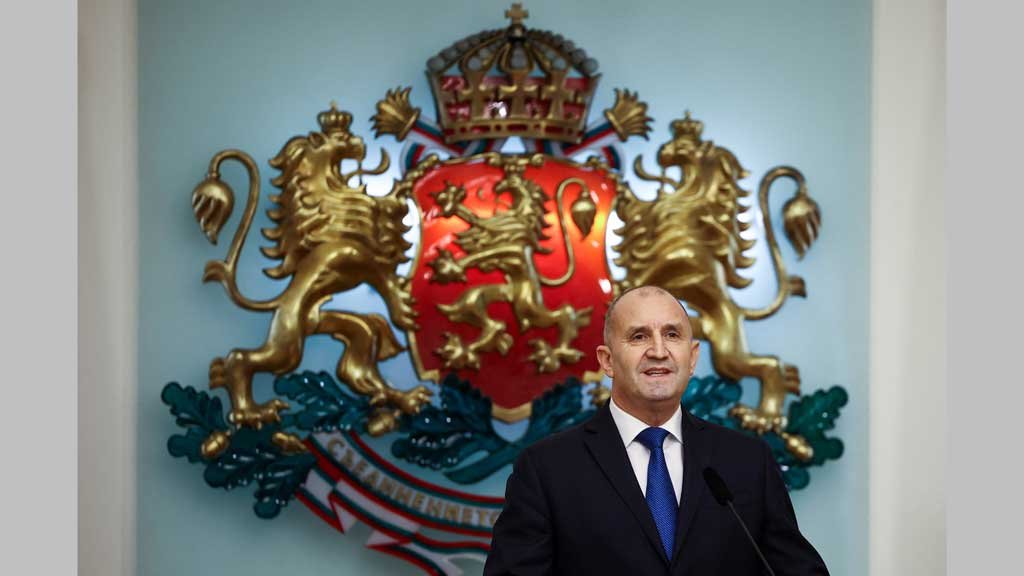
Bulgarian President Rumen Radev said on Monday he will resign, fuelling speculation that he will form his own political party to run in upcoming parliamentary elections after the previous government quit last month.
Radev, who was due to hold the largely ceremonial post until January 2027, said he will submit his resignation to the Constitutional Court on Tuesday. If approved, he will be replaced by Vice President Iliana Iotova until presidential elections in November.
Radev, who has expressed scepticism about Bulgaria’s recent move to join the euro and has taken Kremlin-friendly positions on the war in Ukraine and on sanctions against Russia, was elected president in 2016 and again in 2021.
But he has long floated the possibility of forming his own party to bring stability and fight graft in one of the European Union’s poorest and most corrupt countries.
“Today’s political class has betrayed Bulgarians’ hopes,” he said in a speech. “We need a new public contract.”
RESIGNATION COMES AMID POLITICAL CRISIS
Radev’s move to step down, widely expected in the Balkan country, comes amid a years-long political crisis that has Bulgaria heading toward its eighth parliamentary election in four years.
A fragmented parliament has meant that a series of election winners have failed to win majorities or create lasting coalitions.
The previous government lasted nearly a year until protests against a new budget and widespread corruption forced it to resign in December. Elections are expected in the coming months.
Meanwhile, Radev, a former air force commander, has repeatedly had to appoint interim governments, raising his profile and his own political ambitions, analysts and Western diplomats said.
Radev did not say anything about plans for a new party on Monday, and it is unclear if he will make a move ahead of the upcoming elections. But it appears to be an opportunity for him to become “a saviour from the chaos”, said Tihomir Bezlov, a senior fellow at the Centre for the Study of Democracy in Sofia.
Voters have become increasingly disillusioned with the current political climate, which has been dominated by political veterans including former Prime Minister Boyko Borissov, who runs the leading GERB party, and by oligarch Delyan Peevski, who is under US and UK sanctions for corruption.
Recent polls by Alpha Research showed overwhelming support for a new party and a deep mistrust of the current political system.